
When Scheduled Is Treated as Done


If something appears on a calendar often enough, it starts to feel settled. You assume it’s happening because it always has. The entry stays there week after week and eventually it fades into the background.
Facilities, cleaning and grounds services often operate under that same assumption.
Work is scheduled, visits are planned and routes are assigned. When those schedules are followed and nothing interrupts them, it feels reasonable to treat attendance as a given rather than something that needs checking.
Most of the time, that assumption holds. Teams are reliable, routines are familiar and sites are serviced without incident. From the office’s point of view, the plan is being executed as expected. There is little reason to question whether a visit actually took place.
The difficulty is that a schedule only describes intent, not reality.
Day-to-day service work is shaped by conditions that don’t appear on a rota. Access issues, weather, competing priorities, staff changes and unexpected call-outs all influence how a day unfolds. A visit may be shortened, rescheduled, partially completed or deferred altogether without triggering an obvious signal. When that happens, the schedule still looks correct even if the service delivery no longer matches it.
Over time, attendance shifts from being something that is known to something that is assumed.
A familiar operational situation
A site is included on a regular service route. Visits are scheduled weekly and appear consistently in the system. From an operational perspective, everything looks orderly. The work is planned, the rota is populated and no issues are raised.
Later, a question is asked about whether the site was attended on a particular day. When the records are reviewed, the schedule confirms that a visit was planned and the route shows it as completed. What isn’t clear is whether the team actually arrived on site, how long they were there or whether the full scope of work was carried out during that visit.
To answer the question, someone has to rely on memory, check with the team directly or piece together information from other records. The uncertainty isn’t caused by a failure to plan. It comes from treating planning information as confirmation that work happened.
Teams that experience fewer gaps tend to separate scheduling from attendance. Instead of assuming that planned visits equate to completed ones, they capture simple confirmation that a team arrived on site and began work. That confirmation doesn’t need to be elaborate. It just needs to reflect what actually took place rather than what was intended.
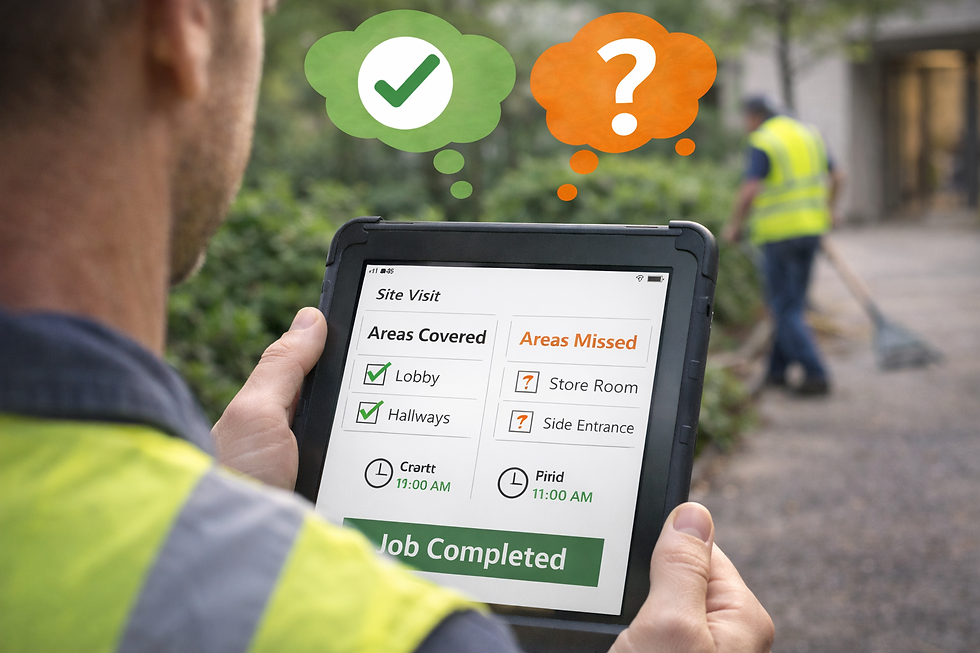
Tools such as WorkMobile are often used in this context to record attendance as part of routine service delivery, giving office teams a clear view of which visits occurred and which did not without relying on schedules alone.
In operational services, confidence doesn’t come from knowing what was planned. It comes from knowing what actually happened.
About WorkMobileForms
WorkMobileForms is used by facilities, cleaning and grounds teams to capture attendance, routine work and simple context as services are delivered. Information is available to office teams straight away, reducing reliance on assumptions and follow-up checks.
Further Reading


Comments