
What Timekeeping Doesn’t Show You


A job is logged as two hours. The visit appears in the system as completed within the expected window, and from the office’s point of view everything looks in order.
Time has been recorded, the schedule has been met, and there is no immediate reason to question what happened on site.
That sense of reassurance is common in facilities, cleaning, and grounds services, where timekeeping often becomes the primary signal that work has taken place.
Start times, end times, and durations feel objective, particularly when work is repeated across the same locations week after week. Over time, logged hours begin to stand in for understanding of how services are actually delivered.
The difficulty is that time alone says very little about what happened during a visit. A cleaner may spend most of a service window dealing with an unexpected issue in one area, leaving other tasks incomplete.
A grounds team may be delayed by access or weather and focus only on priority zones. A facilities engineer may be interrupted mid-visit and return later to close out the job. In each case, the time entry still looks correct, even though the record no longer reflects the shape of the work.
Because timekeeping feels factual, it is rarely questioned. A two-hour visit is assumed to mean two hours of productive service, and that assumption becomes embedded in reporting, reviews, and client conversations. The longer it goes unchallenged, the more meaning is placed on data that was never intended to explain activity, judgement, or context on its own.
This limitation becomes apparent when questions arise that time data can’t answer. A client queries why certain areas still look neglected despite regular visits. A site manager asks whether all scheduled tasks were completed during a maintenance window. An internal review looks at repeat issues and struggles to see any pattern in the records. The time entries are present and consistent, but they don’t explain what was prioritised, what was missed, or why.
When time is treated as the main evidence of service delivery, a blind spot develops. Office teams assume coverage because hours were logged, and clients are reassured because visits appear regular, while operational detail remains largely invisible. The issue isn’t that teams are misreporting time, but that time is being asked to stand in for activity and decision-making.
Where timekeeping starts to mislead
A site receives regular cleaning visits as part of a contract. Each visit is logged for the agreed duration and shows as completed on schedule, giving the impression of consistent service. Over time, complaints begin to surface about specific areas being missed or standards slipping in certain locations. When the records are reviewed, nothing stands out.
The visits happened and the hours were logged, but there is no indication of how that time was divided or what adjustments were made on the day to cope with access issues, interruptions, or staffing changes.
To understand what is really happening, someone has to ask questions, chase explanations, or visit the site themselves.
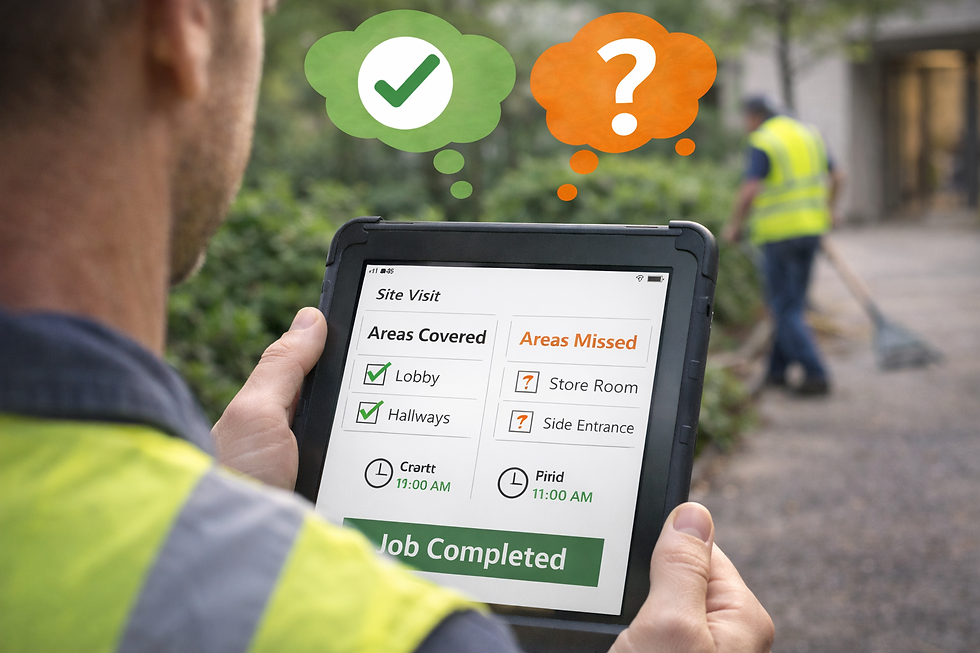
Some operational teams reduce this uncertainty by treating time as one signal rather than the whole picture. Logged hours are accompanied by brief notes about what was covered, what took longer than expected, or what couldn’t be completed during a visit. Photos or simple checkmarks support the record without replacing explanation. Tools such as
WorkMobile are often used in this context to capture time alongside task context as the work is carried out, allowing office teams to understand how service windows are actually used rather than relying on duration alone.
In ongoing services, knowing how long someone was on site is rarely enough. What matters is understanding what that time was spent doing. Without that clarity, timekeeping offers reassurance, but very little insight.
About WorkMobileForms
WorkMobileForms is used by facilities, cleaning, and grounds teams to capture time, tasks, photos, and simple context as services are delivered. Information is available to office teams straight away, helping them understand not just when visits happened, but how they were used.
Further Reading


Comments