
Utility Connection Projects: Keeping Site Information Moving as Work Volumes Grow

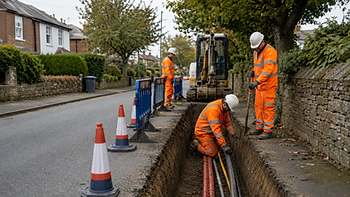
The amount of work around utility connections and electrical infrastructure is increasing. That is not just a feeling inside the industry. It sits against a wider backdrop of grid connections reform, clean power targets and the need to move viable projects through the system more efficiently.
For the companies delivering this work, the policy language can feel a long way from the reality on site.
A project still has to be surveyed, planned, resourced, completed, checked, evidenced and handed over. Teams still need to manage access, permits, RAMS, cable works, civils activity, reinstatement, inspections, subcontractors and client requirements. The practical work happens in fields, substations, roads, depots, compounds and customer sites, not in policy documents.
Yet the two are connected.
As the energy system places more focus on readiness, delivery and connection timescales, the information that sits around each project becomes more valuable. Progress updates, site records, photographs, signatures, completion notes and handover evidence all help show what has happened and what needs to happen next.
For directors and operational leaders, that visibility matters. It supports better decisions, quicker responses and less reliance on chasing people for updates after the work has already moved on.
The work creates more information than people sometimes realise
A utility connection project is rarely just one task.
Even a straightforward job can create a trail of supporting information. There may be pre-site notes, drawings, job packs, RAMS, permits, photos, site diaries, test records, progress updates, defects, variations, sign-offs and completion evidence.
Across several teams and live projects, that information has to move between site staff, supervisors, project managers, office teams, subcontractors, clients and sometimes asset owners.
When that flow works well, it is easy to underestimate its value. The right people can see what has been done. The office is not waiting for missing details. Project managers can pick up issues earlier. Handover packs are easier to prepare. Client updates are based on current information rather than a round of chasing.
The improvement opportunity is not always about changing the whole business. Often, it is about making the key points of information capture more consistent, so the people managing the work have a clearer view of progress.
That is particularly important as volumes increase. Every project creates information. Every additional team creates more updates. Every subcontractor adds another route for evidence, photos and completion records to travel through the business. If those routes are clear, growth is easier to manage. If they are not, the extra work can quietly create extra admin.
Site evidence is part of project delivery
In utility and electrical infrastructure work, evidence is not an afterthought.
Photos, timestamps, locations, inspection records, signatures and notes can all become part of the project record. They may support a client update, a handover pack, a quality review, a payment application, a subcontractor query or a future audit.
That is why the route from site to office matters.
If an engineer, operative or subcontractor captures information at the point of work, the value is highest when that information is linked to the right job, in the right format, at the right time. Otherwise, the evidence may still exist, but someone later has to find it, check it, rename it, attach it, copy it into a report or ask for it again.
On one job, that might be manageable. Across multiple projects, it can become a quiet drain on time.
For a director, that time is not just administration. It can affect reporting, invoicing, handover, dispute resolution and the ability of managers to stay focused on delivery rather than reconstruction of what has already happened.
This is not about blaming field teams or office teams. Most people are simply working with the tools and processes available to them. The question is whether those tools make it easy enough for good information to move cleanly through the business.
Why the flow matters more than the form
The issue is not whether a form is digital or paper. That is too narrow.
The bigger question is whether project information is available quickly enough, clearly enough and consistently enough to support the way the business operates.
That affects several areas at once.
It can influence how quickly client reports are prepared, how easily managers understand progress, how much time the office spends gathering updates, how confidently completion evidence is reviewed, and how smoothly handover information is assembled.
It can also affect growth.
As work volumes increase, businesses often add people, vehicles, subcontractors, clients and systems. The information around the work grows with them. If every process improvement depends on a long internal project, many useful changes never happen. They wait behind larger priorities, even when operational teams already know exactly what needs improving.
This is where the commercial impact starts to show. A missing photo may only take a few minutes to chase. An unclear completion note may only create one extra call. A late update may only delay one report. But repeated across many live jobs, those small moments become office workload, management time and avoidable friction.
For many utility connection and electrical infrastructure companies, the opportunity is to make those process improvements easier to act on.
The policy backdrop makes this more relevant
The UK Government’s Clean Power 2030 plans place electricity connections reform alongside the wider need to build new network infrastructure and support electrification. Ofgem has also been looking at demand connections reform, with a focus on helping viable projects connect in a timely way and allowing strategically important projects to move faster. NESO’s connections reform programme similarly points to a system that prioritises projects that are ready and needed.
These reforms will not remove the everyday complexity of delivery. They will not make site work simpler, reduce the need for evidence or take away the practical challenge of coordinating people, assets and records.
If anything, they reinforce the importance of reliable project information.
The companies delivering work on the ground still need to show progress, manage exceptions, provide updates, evidence completion and support handover. Better information flow will not solve grid connections reform on its own, but it can help delivery businesses operate with more control inside a market that is being asked to move faster.
For directors, that is the practical point. A changing market does not only create pressure to win and deliver more work. It also increases the value of being able to see what is happening across the business without creating more manual reporting for everyone involved.
Making improvement easier to deploy
One reason operational improvements stall is that they are treated as larger software projects than they need to be.
A business may not need to replace its core systems just to improve a site inspection process, a completion record, a photo evidence workflow, a RAMS confirmation, a reinstatement report or a handover checklist.
In many cases, the people closest to the work already understand what is needed. They know which information is often chased, which reports take too long to prepare, which photos need to be captured, which checks must be completed and which records have to be reviewed before a job can move on.
The challenge is giving those teams a quicker way to turn that knowledge into a working process.
That matters because operational improvement is often most valuable when it is specific. A small change to how site photos are captured, how defects are recorded, how subcontractor updates are submitted or how completion evidence is reviewed can remove repeated friction from the day-to-day running of projects.
That is where mobile and back-office workflow tools can be useful. They allow specific processes to be built, tested and adjusted without waiting for a long development cycle. Site teams can capture the right information from a phone or tablet, while office teams receive records in a more structured format.
Where WorkMobile fits
WorkMobile helps businesses create mobile and back-office workflows around the operational processes they already manage.
For utility connection and electrical infrastructure work, that could include site surveys, job packs, inspections, photo evidence, completion records, RAMS checks, defect reports, reinstatement evidence, subcontractor updates and handover documentation.
Information can be captured on site using mobile forms, with photos, notes, signatures, GPS locations and timestamps included as part of the record. Once submitted, that information can be reviewed, reported and shared more easily by office teams.
The value is not simply that a paper form becomes digital. It is that the movement of information between site and office becomes easier to manage.
For directors, that can support better visibility across live work, reduce unnecessary chasing, improve consistency and make it easier to introduce process improvements as the business develops. It can also help avoid the common pattern where growth creates more work for the office before the business has had chance to improve the processes behind it.
A practical way to support growth
Utility connection and electrical infrastructure work will continue to sit under pressure from policy, clients, delivery timescales and operational complexity.
The businesses delivering that work do not need more abstract advice about transformation. They need practical ways to improve the processes that sit around real jobs.
Better information flow is one of those areas.
It helps site teams capture what happened. It helps office teams see what has been submitted. It helps managers review progress. It helps directors understand activity across the business without relying on another round of calls, messages and manual updates.
As connection work grows, the opportunity is not to make every process bigger or more complicated.
It is to make the important information easier to capture, easier to trust and easier to use, so growth can be supported without adding avoidable admin drag behind it.

Comments